Thoughts on the military and military activities of a diverse nature. Free-ranging and eclectic.

Wednesday, May 02, 2007

Cadillac.

This is coolbert:

Today is conspiracy day on the "The Michael Medved" radio talk show.

You call in and discuss your own favorite conspiracy with Michael.

Here is one that I have not heard about before.

"Operation Cadillac". Something that supposedly occurred during the Vietnam War.

American troops, by the end of the war, had very low morale, becoming very lackadaisical in their military bearing and comportment. Did not always take things so seriously. Were a danger to themselves.

To "stimulate" the troops, it is alleged, according to the caller, American Special Forces [SF], and CIA "assets" attacked, in a deliberate manner, U.S. units to make them REALIZE THAT THEY HAD BETTER TAKE THEIR SOLDIERING SERIOUSLY.

I have googled the Internet and found nothing about "Cadillac". Anyone ever hear of this before, even if in passing??!!

I CAN think that something such as described could be plausible, but only very remotely so.

I would think that CIA "assets" might have included Phoenix operatives, South Vietnamese adept at portraying Viet Cong [VC]. I can too imagine that SF commanded units such as the Nung, might have been ordered to "probe" defensive perimeters of American units at the very end of the war, so as to "test" troop defensive postures, alertness, etc. This COULD BE SO!!

[I one time heard a lecture from a U.S. Army Colonel who described how American counter-intelligence during World War Two would infiltrate VITAL war industry installations and place NON-LETHAL booby traps - - JUST TO KEEP PEOPLE ON THEIR TOES!!]

Deliberate attack to inflict casualties??!! probably NOT SO!!

[from around 1970, American presence in Vietnam consisted almost entirely so of combat support [CS] and combat service support [CSS] units. NOT combat units. CS and CSS units by definition would have only assumed a defensive posture, and WOULD NOT have been trained other than in the most rudimentary degree for combat.]

Morale at the end of the Vietnam War for U.S. troops WAS poor. There might be something to this conspiracy theory, BUT NOT EXACTLY AS STATED!!

coolbert.

Labels:

Thursday, June 01, 2006

Behavior I.


This is coolbert:

The U.S. Army has fought in seven major wars since the year 1900.

All fought "overseas". And It HAS BEEN a major concern of the top commanders that American troops comport themselves appropriately with regard to the local populace. A populace, such as in France, Korea, Vietnam, Iraq, we were purportedly assisting and helping. Behavior on the part of the troops that was to be as gentlemanly and judicious as possible, given the circumstances of war.

The goal was not alienate the locals by antagonistic behavior. Alienation that would hinder the war effort.

During the Vietnam War, American soldiers arriving in Vietnam received a series of pocket cards. Guides that instructed the GI in the proper behavior that was expected of them. Pocket cards they were supposed to carry with them at all times.

One pocket card guide was the "Pocket Card, 'Nine Rules'". Nine rules mandated by the American command [MACV] that all soldiers were to adhere to.

Rules of courtesy and etiquette that the American soldier was expected to conform to. Gentlemanly behavior that would establish a proper rapport between the U.S. troops and the Vietnamese friendly to the U.S. forces.

All soldiers received the "Nine Rules" card and were told exactly what the rules meant. NO deviation was to be allowed. YOU WERE TO OBEY!

NOT always obeyed or followed. The ideal that should have been conformed to, but often was not. You get a bunch of angry eighteen and nineteen year old boys away from home for the first time, having been drafted, and not wanting to be in the war in the first place, and you get a good possibility for "incident". Especially when cultures of such marked difference as the Vietnamese and American collide.

A second pocket card guide was the "MACV Pocket Card,'The Enemy In Your Hands'". How to handle prisoners of war. The current 5S system for handling prisoners now used by the U.S. Army is similar to the guidelines of the Vietnam era pocket card. The current 5S method includes:

* Search. [remove all weapons.]

* Silence. [prevent the POW's from speaking to one another.]

* Segregate. [separate officers, NCO's, and enlisted from one another.]

* Speed. [get to the rear as soon as possible.]

* Safeguard. [protect from abuse and danger.]

Yet a third pocket card guide was addressed to commanders. "MACV Pocket Card,'Guidance for Commanders in Vietnam'". Fifteen sensible rules for commanders of units to follow.

These pocket cards should NOT be thought of as substitutes for the Rules of Land Warfare or as Rules of Engagement. Just guides that outline sound, sensible, gentlemanly behavior and policies that create an atmosphere of amity between U.S. troops, their commanders, and the Vietnamese people fighting with the U.S. against the communist forces.

Rules of behavior that comport to the "ideal"? I am sure that General Westmoreland DID want his troops to obey the various rules and guides he laid down. This DID NOT always happen. But was expected.

coolbert.

Labels:

Monday, April 17, 2006

ACAV.

This is coolbert:

Here are several instances of where the M113 APC in Vietnam was put to good use. Was instrumental in ROUTING the enemy when the situation for friendly troops was grim. Examples of how the ACAV in Vietnam was successful.

First from a battle involving the Australian Army:

"Let me set the scene; it is a stinking, non-descript rubber plantation in a place that no one was much interested in, the rain is pouring down as only Asian monsoonal rain can, 108 Australians are fighting for their lives against an estimated 2,000 to 2,500 NVA troops who are on their way to wipe out the whole Australian base at Nui Dat. It is Delta Company of 6 RAR and they are in "deep shit". They have already lost a section and more. Their ammo has run out once and only an emergency resupply from a RAAF chopper has allowed them to keep firing.

Supporting artillery is firing "continuous fire" (24 guns firing 3 rounds per gun per minute) and will drop a total of 2,639 rounds of 105mm and 155 rounds of 155mm (from the Yanks). There are already about 15% of the Australian unit KIA. More are wounded. Some are missing. All are desperate. The NVA/VC are massing for the last attack. The Australian Company Commander has already told his base "If you don't come for us in half an hour, don't bother coming at all". Then through the murk, the rain and the bullets . . .a dull roar, like a couple of bulldozers, no one knew what it was. Then it struck them. The tracks had arrived.

Out of the gloom, lights blazing, .50 cal machine guns going full bore, having already swum a flooded river, with another Company of 6RAR aboard the M113s of the RAAC came roaring in almost Western movie timing to break up the NVA/VC attack and relieve the situation. The NVA/VC withdrew leaving 245 bodies that they could not retrieve.

They call the place LONG TAN.

Sgt Buick and the remnant of 11 Platoon "jumped up, yelled and waved to identify our position, just like in the movies. I felt like one of those Yankees saved from the Indians" (from the book by Lex McAulay)."

Exactly. Just like in the movies when the cavalry comes on the scene at the last moment to save the day.

Some may say that this is NOT an instance of ACAV in action, NO combined arms. Infantry with armored APC's and a lot of firepower, but NOT ACAV. True. But is indicative of what armor in Vietnam could and DID do.

The second example is the Battle of Fire Base Gold . This particular battle involved an entire Viet Cong [VC] regiment massing and attacking a U.S. Army firebase.

Firebases were fixed artillery positions geographically and tactically placed to provide fire support on call for army units operating within range of the fire base. Use of artillery in this manner was something unique to the Vietnam war.

In the case of GOLD, the situation WAS grim. U.S. artillerymen had to fight against overwhelming numbers of a determined enemy. The ACAV, arriving as they did just in time, slaughtered just enormous numbers of the VC enemy without hardly any loss to themselves. Victory from the jaws of defeat, as they say.

So great was the number of enemy bodies littering the battlefield, that an engineeering ACAV vehicle actually began to dig a large trench [hole] in the ground to bury the enemy dead, even while the battle still raged!!

This stuff makes for dramatic reading!

coolbert.

Labels:

Saturday, April 15, 2006

Success?

This is coolbert.

I think most impartial observers would generally agree that the U.S. had a small, limited number of successes when fighting the Vietnam War. A war that of course ended on an unfavorable note for the U.S. military.

As I have said before, many senior career U.S. military officers opposed the war from the get go. They may have not expressed this to their civilian authorities, but inwardly they saw Vietnam as being a no-win situation.

And felt this was so on a number of grounds.

Such as:

* Don't get involved in a ground war in Asia. [your enemy has such an abundance of manpower, that you just cannot kill enough of the enemy. What is lost is easily replaced.]

* American military advantages such as firepower, mobility, etc., are negated by the terrain, weather, and the nature of the enemy in Vietnam.

The "experts" felt that the American military was not able to utilize it's resources that gave it an advantage in conventional warfare. Specifically, armor. Tanks.

Tanks and armor were just not felt to be suitable for Vietnam. This was the impression. More a hindrance than an asset.

And a lot of this impression was later found to be lacking. Primarily from the performance of the Armored Cavalry the U.S. Army fielded. This was the ACAV.

ACAV WAS one of the American success stories of the war. Performed in a manner unexpected. But was not fielded in time or in the numbers to make a big difference. But WAS effective. Unexpectedly so.

The ACAV was a combination of tanks [M48] and armored personnel carriers [M113]. The latter strengthened by increased firepower and protection. ACAV was the correct and proper combination of infantry, armor, artillery, helicopter gunfire [a combined arms unit], that worked in an amazing manner. Units that the enemy did NOT have a counter for.

That this could be so and was so seemed to register as a surprise among the top planners. Top planners who impressions of Vietnam as being NOT tank country were mostly the result of French armor after-action-reports from the First Indo-China War.

"Their [the French] experience also influenced the thinking of American military commanders and staffs when the U.S. Army eventually set about deciding how many and what kinds of forces to send to Vietnam."

American commanders did not initially send armor to Vietnam as the French experience had been negative in this regard.

It seems the French employed armor in Vietnam much as they did in World War Two [WW2]. Dispersed. NOT able to function as independent units capable of independent action. NOT concentrated as operating as ONE. This WAS a mistake the French made in WW2 AND a mistake in Vietnam too.

"Armored units were fragmented; many small remote posts had as few as two or three armored vehicles." [in the French experience.]

"Since armored units were generally assigned to support dismounted infantry, their speed and ability to act independently, an important part of any armored unit's contribution to the battle team, were never used." [in the French experience.]

"Combined with the misconceptions of the French armored experience, this reasoning caused most planners to conclude that Vietnam was no place for armor of any kind, especially tanks."

These perceptions proved to be instrumental in negating the positive role that ACAV in increased number could have had from the start of large-scale American involvement in Vietnam. But this was not to be. Serious positives were not even a matter for consideration, or so it seemed. Units that WERE ALREADY MECHANIZED, became mere foot troops as Vietnam was said to be NOT conducive to MECH WARFARE.

"But this study was not completed until almost two years after the arrival of the first Army ground combat units. During those two years many of the units were sent to Vietnam without their tanks and armored personnel carriers. Some units were even converted from mechanized infantry to infantry before deployment. The earlier studies had provided the overriding rationale for the decisions of 1965 and 1966."

[we are talking about a study as to the feasibility of using armor in Vietnam done by the U.S. Army. TWO YEARS after large scale American involvement had begun!!]

It was realized that armor and the ACAV concept WOULD work in Vietnam ONLY after a point where the American public had already soured on the war and wanted OUT!!

coolbert.

Labels:

Tuesday, February 07, 2006

Ap Bac.


This is coolbert:

Even with the most sophisticated of technologies, please do not think that defeating an insurgent enemy is an easy task. If that insurgent enemy is determined and resolute, even advanced equipment in the hands of the "good guys" can go for naught.

Such was the case at the Battle of Ap Bac in Vietnam. 1962.

Vietnam was at the time a place on the globe that few Americans had even heard of, or could even point to on the map. It was terra incognito!!

NOT so to the American advisors leading and almost having to command the South Vietnamese troops they were trying to HELP!

The American military felt that with just the right type and amount of equipment, the Viet Cong [VC] could be overwhelmed and defeated. Give the right technological advantage to the Army of Vietnam [ARVN] and the war would be shortly over.

Helicopters [the "Flying Banana"] and armored personnel carriers [APC's] of the M113 variety were seen as a big part of the answer. Mobility and protection would allow for an overwhelming advantage. The under equipped VC enemy would be routed and fast too when faced with such weaponry!! Such was a large part of the thinking.

Ap Bac was to prove this assumption to be wrong. And big time too! NOT only were the ARVN troops, suitably equipped, NOT victorious, they got whipped, and good too!!

Ap Bac was to be fought with an air assault from helios by ARVN troops, backed up by another ARVN force in APC's. This was felt to be way more than the VC could EVER handle. NOT SO!!

This battle field loss caused considerable egg on the face of the American military. A defeat that was widely reported in the American press by some very distinguished reporters.

The supposed strong points of mobility from the helios and the armor protection of the M113's were found to be in certain cases liabilities!!

Ap Bac demonstrated this to be so!!

A VC unit, dug in and waiting, ambushed the helios as they attempted to land the air assault ARVN troops. Automatic weapons fire made short work of the unarmed choppers. The "flying banana" was just not up to the task, five being shot down and nine damaged. The air assault was a failure.


When the M113's made their assault, it too was a failure. It was felt that the approaching armor rushing toward the enemy would create something analogous to "tank fright" in the minds of the dug in VC and cause them to bolt. This too did not happen! The VC were prepared and resolute. The APC commanders, operating .50 caliber machine guns atop the APC's, were easy targets and mowed down almost with ease. The APC attack stalled and did press home the attack when it came under HAND GRENADE ATTACK!!

Read a very good wikipedia account of the battle by clicking here.

[around the same time as Ap Bac, ARVN forces riding INSIDE of APC's encountered VC equipped with RPG's [rocket-propelled-grenades]. A direct hit on the flat sides of the M113 would penetrate as if it was the proverbial hot knife through butter, killing the entire infantry squad riding INSIDE. After several encounters of this type, the ARVN ordered all their troops using APC's to ride ATOP their vehicle, negating the small arms protection of the M113, but preventing instant incineration from a RPG hit!! It became a common sight during the Vietnam to see scores of ARVN troops riding ATOP a M113 rather than inside, such was the danger from a single RPG!!]

Read another account of how the M113 was successfully employed in Vietnam by clicking here.

The above linked web site also describes how new, improved, and advanced M113 Super-Gavins are being used extensively in Iraq, with success. Improvement made with regard to the hard lessons learned in Vietnam!!

[riding atop the M113 was no fun either. It was and is a very rough ride. You can fall off and be killed or badly hurt. Sometimes run over by another APC!! When you ride ATOP, you have to hold on with all your might or it could be curtains. I know about this from first hand experience!!]

After Ap Bac, American senior commanders knew that technology and superior equipment were NOT going to make victory in Vietnam a sure thing!! New tactics for helios too had to be developed to prevent catastrophic losses as occurred.

In the end, NOTHING was able to stop VC and NVA [North Vietnamese Army] victory. Vietnam turned out to be a bad learning experience for American commanders over and over!

coolbert.

Labels:

Sunday, July 31, 2005

Westmoreland.


This is coolbert:

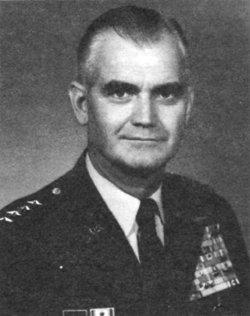
I see that General William C. Westmoreland has passed away recently. Was ninety one years old. Led a full life, with achievements that only few can even dream about.

Was commander of U.S. forces in Vietnam during the period 1964-1968. Commanded during that period of the war when American combat units were MOST involved. Became a controversial figure during this period. Is considered to be the one military man who left the strongest and most lasting imprint on U.S. involvement in that war.

A war that did not develop with a favorable conclusion for the U.S. OR the South Vietnamese.

How WILL history judge the legacy of General William Westmoreland?

As a leader, Westmoreland undeniably rates very high.

Had a LOT of presence and bearing. LOOKED like a General. ACTED as a General. It was as if Westmoreland was BORN for his role in life. Westmoreland evidently fulfilled leadership roles even from the earliest age. And this was, as Westmoreland himself commented, came as even a surprise to him. He just SEEMED to exude leadership. Without even TRYING!! DID show concern for the combat troops. Was NOT a commander who lived in a rarefied atmosphere. MADE an effort to exercise command leadership without micro-managing. DID see combat and comported himself well as a combat commander [commanded an artillery battalion in the ETO] during World War Two [WW2]. In the leadership role, left little to be desired.

As a manager also must rate high.

In 1965 alone, American forces were able to move 100,000 troops 10,000 miles, and do so in 100 days. At the time, this was unprecedented. Moving that much combat power was an indication of the resolve the U.S. had AT THE TIME NOT TO LOSE IN VIETNAM. This move was a consequence of the appreciation of the situation that Westmoreland made at the time. An appreciation that the South Vietnamese were on the VERGE OF LOSING. The South Vietnamese were seen as not only being NOT ABLE to defeat the communist forces, but could not, in the short time, even stop them. The South Vietnamese army was on the edge of disintegration and defeat. American troops were the only reply that Westmoreland saw as being a viable alternative to communist victory.

It should be kept in mind that the role of a modern commander of the stature and rank of Westmoreland is NOT to involve himself deeply in the planning, operational art, and tactics necessary for victory. Westmoreland did NOT command in the fashion of say a Wellington or Napoleon. Having an instantaneous and with a single sweeping glance see the whole battlefield.

The modern commander such as Westmoreland has a staff or staffs that make plans and offer the commander options to accomplish the mission, based upon the commanders perception of the battlefield.

The modern commander such as Westmoreland is offered plans from his staff as to how to accomplish the mission. The modern commander such as Westmoreland must make correct decisions, implementing plans and operations that will guarantee success, based upon the mission.

The modern combat commander such as Westmoreland must act as a manager more than anything else, in the same context as the modern business manager would conduct business. Details are left to the subordinates, with delegation of authority. Keeping in mind that the manager DOES bear overall responsibility for what transpires.


As a military strategist
, practitioner of the operational art, and as a innovative tactician, Westmoreland, in the eyes of some, seemed to be lacking.

It was felt that the appointment of Westmoreland at the time [1964] to command U.S. forces in Vietnam, was somewhat of a surprise to his peers. Westmoreland was felt to be NOT the brightest lightbulb around. I feel this is just not so. NO ONE reaches the level of rank and command such as Westmoreland did without having something in the upstairs department. Westmoreland was an artillery branch officer. A combat branch of the Army that DOES require a measure of technical ability and an appreciation of "science" [science here defined in the very general sense].

Westmoreland did command and fight a war against the communist enemy in Vietnam in a manner he felt was commensurate to the situation!

That is to say, mass resources, locate the enemy, bring overwhelming firepower to bear upon the enemy, and defeat that enemy in what would be basically a protracted war of attrition. This was how U.S. commanders all throughout the Twentieth Century fought wars. And, in WW1, WW2, and to an extent in Korea, this manner of fighting DID prove to be successful. This was the model that Westmoreland emulated. A model that probably ANY American General of the time would have followed as well.

And, to an extent, this model of warfare WAS successful. The American military in Vietnam DID kill extraordinary numbers of the enemy [2 million to 3 million enemy killed??].

Under Westmoreland, this American strategy DID NOT prove to be successful in the long run. It was seen by many as a policy of using a sledgehammer to crack the proverbial eggshell. Many have contended that rather than using overwhelming firepower, a more flexible and reserved offensive capability should have been employed. Again, Westmoreland decided to fight the war, against primarily North Vietnamese Army light infantry units in this fashion [overwhelming firepower]. AS American combat commanders had been taught to fight. This was their experience, an experience in the past that had proved itself to be effective.

[Some critics have suggested that Westmoreland did NOT make an effort to understand his enemy in Vietnam. This may be true, BUT, it was not germane to understand the enemy given the American way of war at the time of Vietnam. NO ONE would have ever suggested that in WW2, it was necessary for American commanders to read "Mein Kampf", understand German National Socialism, or even understand German history and culture. Again, ruthless use of overwhelming firepower in a war of attrition was seen as the key to success.]

Westmoreland DID seem to fight a REACTIVE war. U.S. forces seemed to be merely reacting to the enemy most of the time. This was a perception that many had. And this may well be true. The North Vietnamese/Viet Cong enemy DID seem to hold the initiative. And strived to do so and were successful in this effort to exercise initiative. General Giap himself has commented on this. That the communist forces on all occasions DID seek the initiative. This was very foremost in their thinking. American firepower did quite often negate the initiative held by the communists. But, not possessing the initiative IS felt to be a serious drawback in successfully prosecuting a war effort. If you DO NOT have the initiative, you have a serious disadvantage.

Westmoreland did feel that his efforts were hampered from several quarters. This was to include:

* Excessive micro-managing of the war from politicians in Washington.

* An American public not in full support of the war.

* A very active and at times effective anti-war movement acting in the communist interests.

* An unfair press. A press that concentrated on and even enjoyed [almost maliciously so!!] pointing out American failures. A press that constantly was negative.

In retrospect, the career of General Westmoreland will be forever associated with Vietnam and the lack of American success.

In my opinion, for the most part, Westmoreland DID call the right shots regarding the war, as they were presented to him at the time, and with conviction on his part. That Westmoreland was NOT allowed to prosecute the war as he saw fit, as say in the manner of an Eisenhower in World War Two, was due to factors beyond his control.

The American loss in Vietnam was NOT primarily due to American military ineptitude. Westmoreland, as did the bulk of American forces in Vietnam, DID acquit themselves well. In 1964, NO ONE could have foreseen that U.S. forces eleven years later would have to leave Vietnam with their tails between their legs. Vietnam developed in a fashion NO ONE could have anticipated!!

I fear that the legacy of General Westmoreland will ALWAYS be controversial. But I do not think defeat in Vietnam was the result of his actions. Defeat in modern warfare cannot be described in simple aphorisms or attributed to simple reasons.

coolbert.

Labels:

Tuesday, April 13, 2004

Colonel Dewey.


This is coolbert:  

Much hay has been made over the decades, and especially during the Vietnam War, about the first American mission to Indo-China, at the very end of WW2.

This mission, an OSS group headed by a Colonel Dewey, parachuted into Indo-China, the northern part of Vietnam, in say around May 1945. The goal was to establish contact with Ho Chi Minh, evaluate his resistance force, arm and direct and mold to U.S. interests if possible.

Many persons opposed to American involvement in Vietnam made a point of reminding the U.S. government that Dewey was favorably impressed by Ho Chi Minh and his "movement". And this was so [a famous photo was taken of Dewey and his OSS team with Ho and his command staff, everyone having a big smile on their face]. Dewey sent reports back to the OSS reporting that Ho was a man the U.S. "could work with". Being so favorably disposed toward Ho, Dewey felt that accommodation could be reached with Ho and no conflict existed between the interests of Ho's "movement" and the interests of the U.S. government.

These same very persons who are quick to mention the initial favorable impressions that Dewey had of Ho leave out one important fact. An important fact that in all probability they omit on purpose. By September of 1945, after being in Indo-China for only a few months, Dewey had become extremely disenchanted with Ho. Realized that Ho was not the good guy that he [Dewey] had originally believed. As a consequence of this disenchantment, Dewey was entrapped into an ambush and murdered. His body was never recovered, Dewey becoming the first American casualty of the Indo-China war, and the first MIA whose remains were never found or returned. This was indeed shapes of things to come.

[in some instances, it is suggested that Dewey was "lost" and was killed by a sentry who mistook him for an attacker. I guess the jury is out on that one??]

coolbert.

Labels:

Sunday, February 22, 2004

Analogous?

This is coolbert:

The sequence of events that General De Puy mentions could easily lead one to assume that events were to unfold much as they did at Khe Sanh (KS) as at Dien Bien Phu (DBP).

* First, a large garrison [Marines] is set up in a remote area.

* This garrison is then isolated and cut off from overland resupply and reinforcement.

* Then a large enemy force begins a siege.

* This force is large and outnumbers the defenders of the garrison in a substantial way.

* Then a bombardment begins.

* Further reinforcement and resupply by air becomes more and more difficult.

* The enemy assault force (North Vietnamese Army (NVA)) then begins attacks to probe the defenses and even makes attacks of a nature to gain even more advantage than they already have.

* The enemy initiates sapping, mining, and trenching reminiscent of DBP.

* All this would be culminated by a massive enemy ground assault combined with an overwhelming bombardment to destroy the garrison.

This is what occurred at DBP.

Events at KS did develop at first in this way, but then the comparisons end.

* No large ground assault of divisional size of greater did occur at KS.

* Bombardment at KS from NVA artillery did not ever occur with the same intensity to threaten the garrison at KS as happened to the French at DBP.

After a prolonged siege, the enemy force at KS just seemed to fade away.

Now, it has been suggested that the enemy action at Khe Sanh was a diversion. A diversion to take the attention of U.S. commanders over the upcoming Tet Offensive. Giap himself has said this to be so. My own perception is that this just is not correct. I believe that Giap did see KS as being an analog to DBP. He would be able to destroy the Marine garrison at KS just as he had done at DBP. This did not occur, and Giap just cannot bring himself to admit this.

coolbert.

Labels:

Friday, February 20, 2004

Arc Light.

This is coolbert:

Arc Lights at Khe Sanh (KS).

The name Arc Light was assigned to all B-52 missions flying out of Guam during the Vietnam war.

Three B-52 bombers flying in formation would unload their payloads on the same target simultaneously.

This was supposed to be the most highly feared weapon the U.S. had during the entire war.

Either Morley Safer of Mike Wallace of Sixty Minutes said that interviews with North Vietnamese soldiers after the war confirmed this fact. According to North Vietnamese vetarans ofd the war, NO American weapon was more feared than the B-52!

One flight of three B-52's would carpet bomb a target, creating a box shaped bombed area one and one half (1 1/2) miles long and three quarters (3/4) miles wide. Everyone within that box above ground would be killed. Everyone within one mile beyond the boundaries of the box also above ground would be wounded in some manner. A very fearsome weapon system.

The amount of ordnance expended at KS totaled nearly 100,000 tons of explosives. Most of this was in the manner of dropped bombs from flights of B-52's. Now, that amount of explosive is equivalent to five to ten Hiroshima types a-bombs dropped on KS!!

This was an impressive amount of ordnance by any standard.

This to is a clear indication of the significance and importance that the battle and siege of KS had in the minds of the U.S. commanders. Any time in these declassified reports reading about 27, 33, or 36 Arc Light missions during the siege, they are talking about multiples of three B-52's conducting carpet bombing against North Vietnamese targets.

How was this ordnance dropped without having the U.S. base at KS inadvertently struck by U.S. bombs? Well, it is reputed that the U.S. set up three large metal plates [some sort of corner reflectors] in the base itself, arranged in a triangular pattern. The radar from a B-52 could pick up this triangular shaped pattern and the lead bombardier would know that is where not to bomb!

An apocrypha account was carried in the Stars and Stripes newspaper at the time of the KS siege. This account was entitled, "The Rats Are Leaving Khe Sanh". It seems that the base at KS was infested with rats. Rats that were prompted to leave the base and forage outside the base once the sustained and enormous Arc Light bombardment of the countryside surrounding KS had began. It seems the rats found suitable forage in the numerous remains of dead North Vietnamese soldiers killed during the carpet bombing!!

coolbert.

Labels:

Friday, February 13, 2004

Dien Bien Phu.

This is coolbert:

This unclassified memo written to Westmoreland just prior to the siege of Khe Sanh starting is most interesting.

It does seem to suggest that Westmoreland did have the French defeat at Dien Bien Phu (DBP) on his mind.

Did want to understand what happened at DBP and why the French lost.

Two interesting points from that memo.

* The French force did consist of mixed troops. French, Legionairres, North Africans, Vietnamese, Tai [montagnards]. Such a mix cannot fight well.

* Of special interest is the inclusion in the memo that parachutist reinforcements send to DBP included over six hundred "legs" [non-airborne] troops making their first jump when they parachuted into DBP. These were men who made the jump without any prior training. They did this knowing the risks, and knowing that the battle was lost and they were doomed to be killed or captured in the subsequent fighting. They wanted to participate in the disaster and did so willingly.

Knowing what did not succeed in the past is a way to know what will succeed in the future?
coolbert.

Labels:

Wednesday, February 11, 2004

Alsop

This is coolbert:

Among the declassified documents regarding Khe Sanh is a CONFIDENTIAL Literally Eyes Only document from LBJ's security advisor, Walt Rostow.

This document narrates a luncheon with Joseph Alsop, at the time a very prominent columnist who wrote extensively on national security interests.

Alsop is quoted as saying that if the U.S. air offensive is ceased over North Vietnam, this would release 800,000 North Vietnamese military personnel for the ground war in South Vietnam.

Alsop is talking here about all the air defense personnel that were dedicated to defending against U.S. aircraft bombing targets in North Vietnam. This figure of 800,000 is interesting in light of the previous post regarding the 1 million man army Germany employed to defend against the U.S.-British strategic bombing offensive.

Alsop fought in WW2 as a Jedburgh. A member of a reconnaissance team parachuted into France. Alsop did have credentials for being a writer on military subjects. Seems to be well informed also of the number of personnel required to defend against the American air war in Vietnam. The man had contacts and was privy to some classified info?

coolbert.

Labels: